2 Short Story Recommendations: “Killing Babies” and “Candy for Hanif”
These next two stories don’t really share much in common other than the main characters who are driven to making what would seem to be extreme decisions based on their personal circumstances that ultimately revolve around their relationships. In “Killing Babies” by T.C Boyle we meet Rick, who is in a personal conundrum of politics. In “Candy for Hanif” by Aaliyah Bilal, we’re introduced to Sister Norah and her son Hanif. Short stories remind us of our interconnected and social existence as humans. I think it’s hard to say which story ends in a crazier way, but the endings will certainly have you thinking “What the fuck?” if not “What the fuck happens next?”.
3. “Killing Babies” by T.C. Boyle
Rick is a narrator whose attention to detail would’ve served him better if he was as self-aware as he was aware of the world around him. Through Rick’s eyes we get his brother Phillip, his wife Denise, and their world of Detroit, Michigan. Rick’s on some sort of probation or else he could face jail, and this reunion with a brother he couldn’t be more apathetic about only serves as a background to the story. Phillip’s stern, but loving, approach is very familiar for anyone who can relate to the exhaustion of being confronted with your past after having left it behind. You can see I love stories about dysfunctional (or maybe imperfect is a kinder word) sibling relationships.
Nonetheless, Phillip’s profession as a service provider in an abortion clinic serves as the real driver of the story. This isn’t really a problem to anyone except for the protestors who converge on the clinic. You can probably see where this is going and if you can’t - read the story and enjoy the ride it takes you on.
“Killing Babies” is a story that could be told in less words than it has. But I find that the story is pretty much a good representation of life, at least for most folk - everyday moments that lead up to something grand. The same way small strokes make one big painting. And missing a single stroke could change the nature of the image, in the way one particular scene or character could certainly change the story.
But T.C Boyle’s characterization of Rick, and the hope you feel for him before you see that dark side, makes for a captivating story. He’s a weirdo and a stalker - quite different from the Curtis Smith we see in Jamel Brinkley’s “A Family” - but he isn’t irredeemable when we meet him. By the end of the story, however, opinions could change.
I particularly appreciate the way Boyle sets up the last scene in the book describing the mob that descends upon the clinic as zombies. The character is a separate voice from the author, and reading the characterization of these protestors - the disgust and dehumanization - still doesn’t prepare us for what follows.
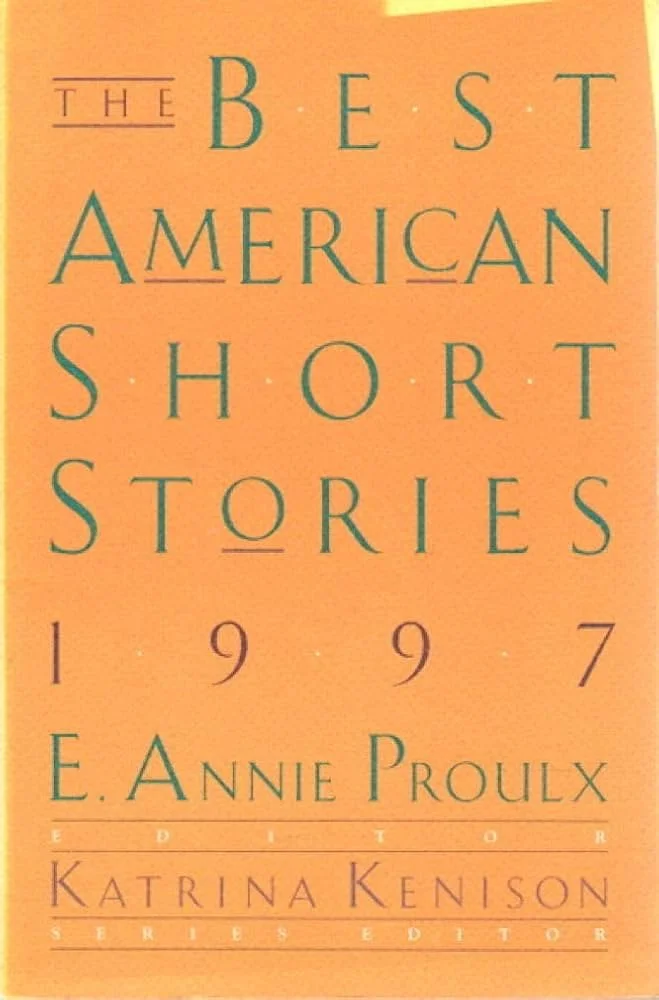
I found this story in The Best American Short Stories 1997, edited by E. Annie Proulx.
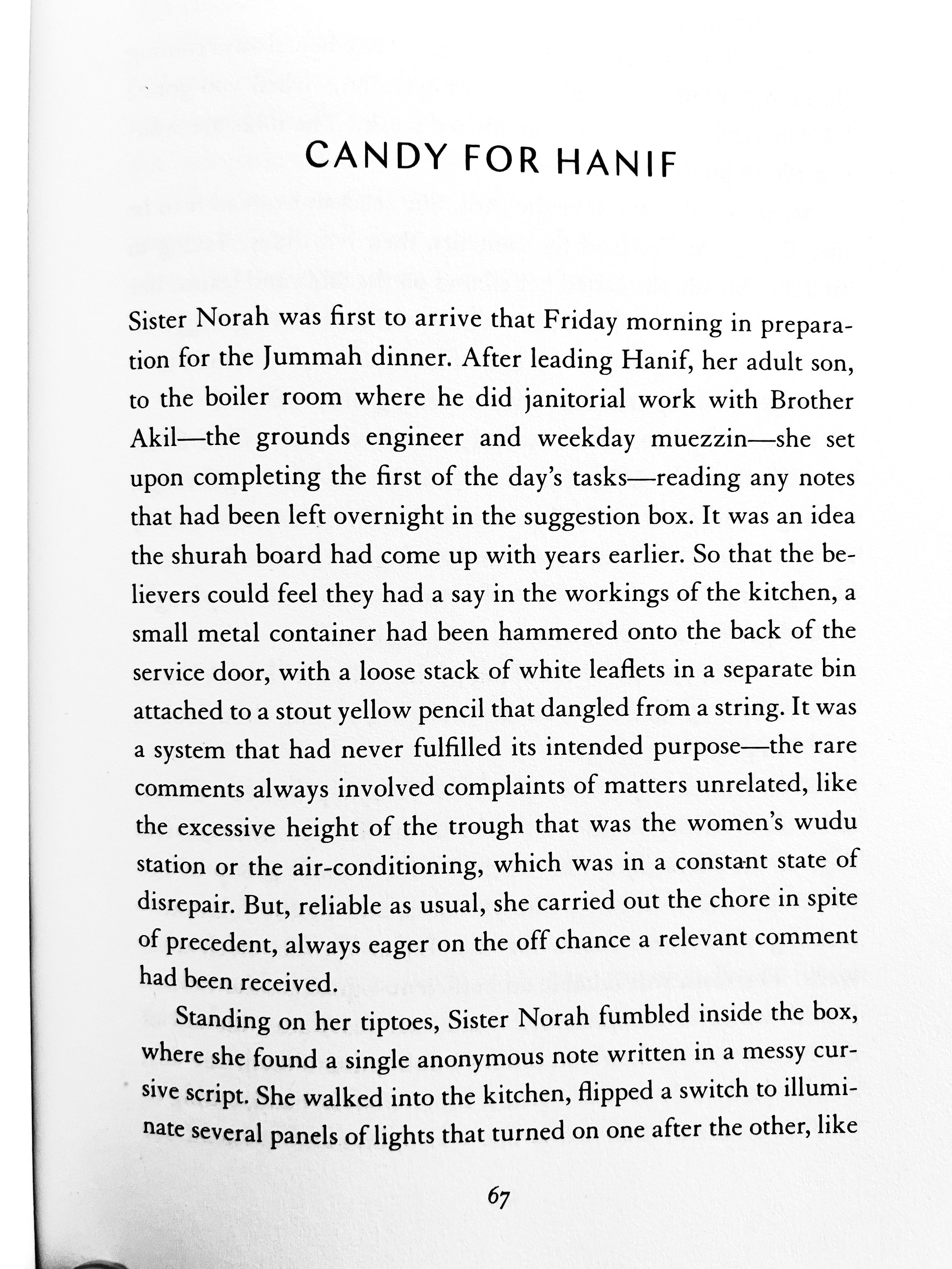
“Candy for Hanif” by Aaliyah Bilal
As the national conversation around autism, disability, and the social and economic cost of it rages across the country, “Candy for Hanif” feels like a very appropriate story to highlight as it introduces us to Sister Norah and her son, who’s disability isn’t specified, Hanif.
cover
What is specified is that he’s fully grown with the mind of a child and this is shown through a few scenarios described in the text. “There were too many opposing forces raging inside him –– he had a mind like a child’s, though his body pulsed with hormones that deepened his voice and made dense muscle of his limbs, communicating in all the ways a body does that he was a full-grown man.”Sister Norah’s refusal to have Hanif in a home is criticized by the people around her, especially Sister Lunell. Still, Sister Norah is a mother and mothers stick beside their children. Right?
Bilal writes Norah with such a specificity. The details feel important. The inner conversations we read Norah experience are conversations we may have with ourselves. And if not, they are conversations we should probably have with ourselves. We see Norah’s doubts and inconsistencies very clearly. We also see that Norah is, in general, a very giving person. Ahead of a boat trip, a young homeless man approaches the group - Sister Norah, Beverley, Cheryl, and Mattie, asking for change. While the other ladies move forward in disdain - that Bilal notes is for both the young man and Sister Norah herself - Norah gives the young man $5. Even in Hanif’s absence she can’t help but be a mother to someone.
The story closes with the ending of the boat trip. Sister Norah has forgotten the candy for Hanif and that just can’t happen so she goes to get it which only leads to some other chaotic events. But when it’s all said and done she’s a mother.
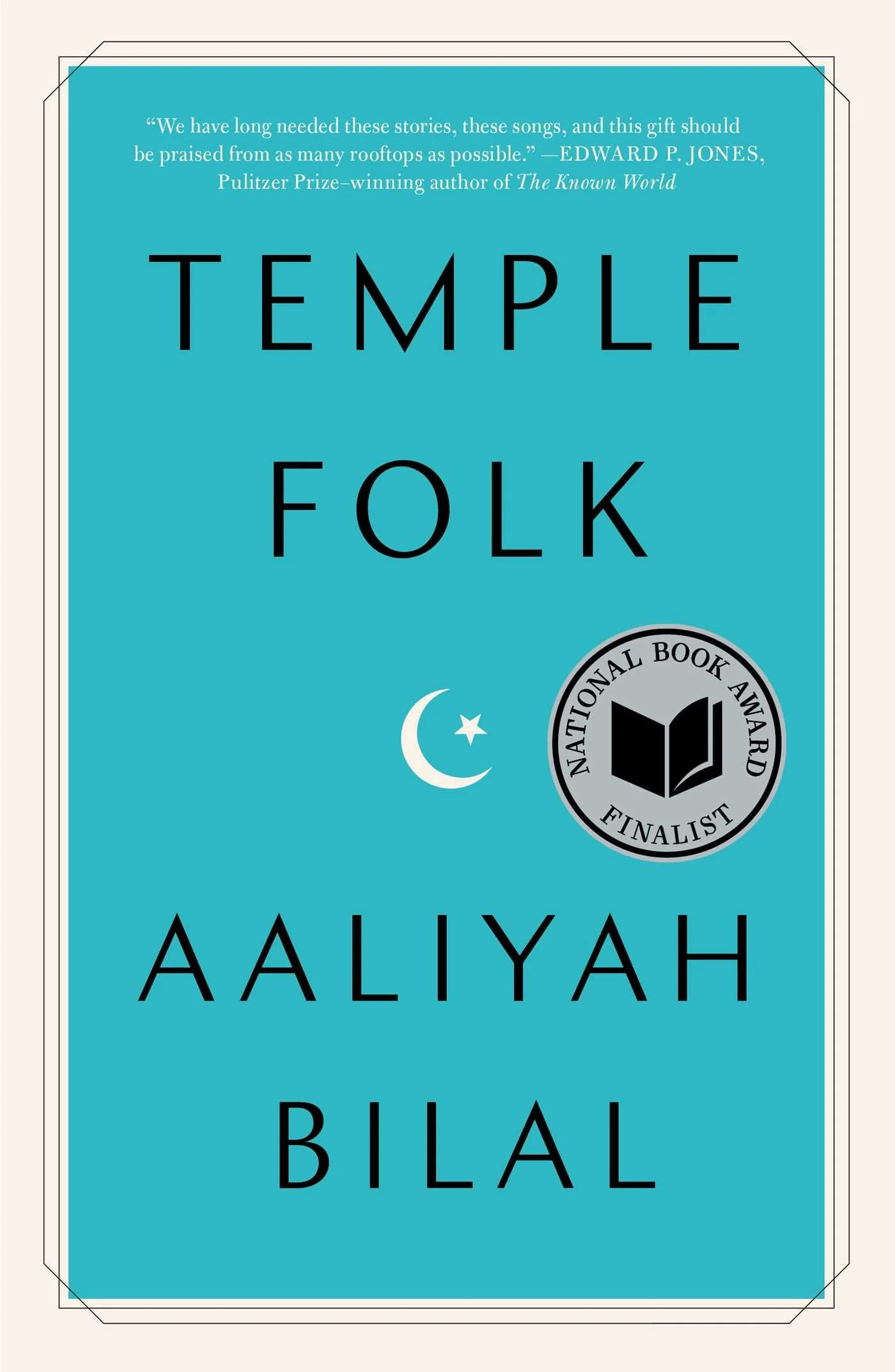
“Candy for Hanif” can be found in Aaliyah Bilal’s latest collection Temple Folk.